

I Love Lily Allen
Greetings fellow killjoys! It’s been in minute. I left the US (for obvious reasons), moved to Switzerland, and am figuring out life as an immigrant in a brand new country, learning a new language, new everything, looking for a new job (holler if you have any academic or theatrical connections here!)… hence the protracted hiatus. Did you miss me? Anyways… I have some feminist killjoy joy to share with you and it’s about Lily Allen.
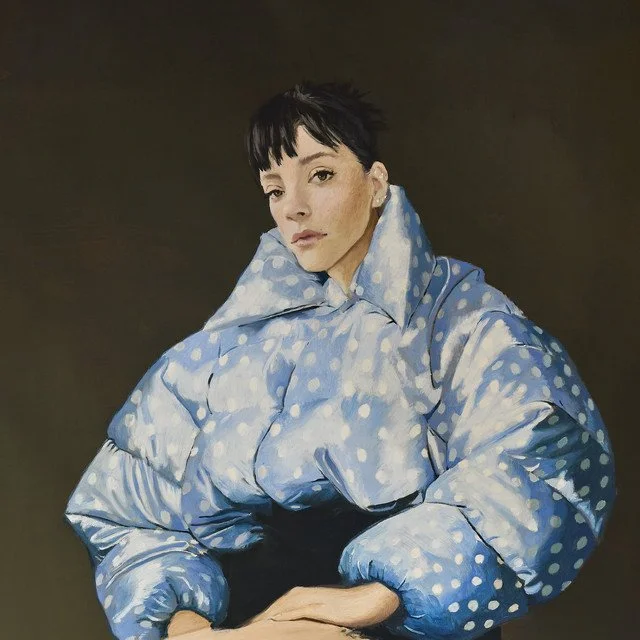
So… I am completely obsessed with her new album West End Girl which was released in late-October of 2025. I listened to it for the first time in November and since then have probably listened to it hundreds of times. No joke, HUNDREDS. On New Years eve day alone I played it through start to finish 7 times(!). Let’s put it this way: I already know my Spotify wrapped for 2026.
So WTF is up with West End Girl? In short, the album is the narrative of the dissolution of Lily Allen’s marriage to actor, David Harbor (Hopper in Stranger Things).
The album begins with Allen & Harbor buying a beautiful Brownstone in Brooklyn and then her abruptly being cast in a play on The West End (hence the name) and Harbor having… shall we say… a less than supportive reaction. The album appears to move chronologically from Allen going to London and Harbor telling her he “needs” to open up the marriage, to Allen “people-pleasing” and consenting (within a set of boundaries), to Harbor then going on to break each and every one of them, and the whole marriage falling apart.
In “Madeline” (a song in which she includes as lyrics the actual text exchanges with the “other” woman) she sings,
We had an arrangement
Be discreet and don’t be blatant
There had to be payment
It had to be with strangers
But you’re not a stranger, Madeline
A few songs later Allen tells us the story of finding Harbor’s, “Pussy Palace” when she goes to their West Village apartment to drop off his things after she tells him “[d]on’t come home I don’t want you in my bed.” She sings (in the song aptly titled, “Pussy Palace”):
Up to the first floor
Key in the front door
Nothing’s ever gonna be the same anymore
And that’s when I realized
Something don’t feel right
I didn’t know it was your pussy palace
Pussy palace
Pussy palace
Pussy palace
I always thought it was a dojo
She then goes on to describe finding a:
Duane Reade bag with the handles ties
Sex toys, butt plug, lube inside
Hundreds of Trojans, you’re so fucking broken
How’d I get caught up in your double life?
I mean… What an EPIC fuck you to a man who it appears, fucked everyone.
By the end of the album Allen seems to arrive a place of acceptance. Acceptance of self (“Let you W/In”) and of her new reality (“Fruityloop”). In “Let you W/In” she tells Harbor:
I will not absorb your shame
It was you who put me through this
I could tell myself you’ll change
Do it all again, be deluded
Never get your sympathy
I don’t think you’re able
But I can walk out with my dignity
If I lay my truth on the table
In the final song, “Fruityloop” she sings:
It’s not me
It’s you
It’s what you’ve always done
It’s what you do
Forever, ‘till you die, it’s true
It’s not me
It’s you
And there was nothing I could do
You’re stuck inside your fruity loop
After this song I almost always, without fail, go back to the first song and listen to the 44 minute album again.
But why?
Why can I not stop listening to this?!
Sure, the music is fantastic, and there are some real bangers on the album, great beats, and truly wonderful vocals from Allen and her featured artists, but I knew there was something more to my obsession.
I wanted to tell myself that I deeply related to Allen, but I don’t… not really. I met (and then married) my first serious boyfriend seventeen years ago and we’re still very happily married. I married a really Good Guy. Just like… “good” good. Uncomplicatingly, simply, good. No marriage is perfect, of course, there are bumps along the road and in seventeen years some times are better than others—I don’t want to lie and say that everything is always sunshine and rainbows—but really most of the time it is. I’m really lucky.
So why am I obsessed with this album (which, by the way, is being turned into a play on, you guessed it, THE WEST END!)?
Like always, as an academic, critic, and theorist, when I have a really strong reaction to something I need to know why. Why this affective response?[1]
Today, while walking the dog with my Good Guy it hit me.
While I can’t empathize with Allen in terms of being married to a shitty man who cheats and lies and gaslights me… I can certainly empathize with having men in my life who are pretty shitty to me. Without naming any names, I know what it feels like to be dismissed, ridiculed, and rejected. To wish that someone you care about would, as Allen says in “Beg for Me,” quite literally “beg for me” to be in their life. To think “Where is your empathy/ For all my pain/ My friends all tell me you are deranged.” To “want to be told I’m special” and for them to “want me to stay.”
I’ve been hurt by some of the people closest to me. And other than one shitty female friend from college, they’ve all been men. Men I was supposed to trust and look up to. How I ended up finding my “Good Guy” is some kind of miracle because most of my past (and sadly some of my present) with men is me feeling insecure, rejected, sad, and desperate for the men who should care about me… to actually give a shit.
I know I’m a bit of an “acquired taste” and I’m not perfect by any means, but if the worst thing I’ve done to someone is call them out on a racist remark or disagree with them on American foreign policy in Israel (it boggles my mind why we can’t all agree that bombing children = war crime), and those things are enough for someone to tell me to my face that they don’t like me or completely write me out of their life… well… I’m fucking hurt and I’m fucking angry.
Lily Allen’s album celebrates a kind of righteous female anger. She takes hers and weaponizes it to “lay her truth on the table” and I am in awe of her bravery to do so. She is a badass queen and I bow down to her.
I’m fucking angry too—and Allen’s album is an invitation to all angry women like me to sing out loud, in full voice and in public, their hurt, grief, frustration, rage, dejection, confusion, betrayal, resentment, and every other feeling we might have for the men who made us feel this way—without apology.
It is a gift.
Queen of My Feminist Theory Heart, Sara Ahmed, tells us in Living a Feminist Life(2017) that when it comes to relationships:
bonds can be violent. A bond can be diminishing. Sometimes we are not ready to recognize that we have been diminished. We are not ready. It can take psychic as well as political work to be ready to snap that bond. When you do, when you snap, it can feel like an unexpected moment that breaks a line unfolding over time, a deviation, a departure. But a moment can be an achievement; it can be what you have been working for.
You might be willing to snap the bond. […] We have to share the costs of what we give up. But when we give up, we do not just lose something even when we do lose something. We find things. We find out things that we did now know before—about ourselves, about worlds. A feminist life is a journey, a reaching out for something that might not have been possible without the snap, without the snappy encouragement of others.[2]
Allen’s album invites us to snap those bonds. The ones that we allow to continue hurting us even when we can hardly believe that the hurt can get any deeper.
In Ahmed’s follow up text (basically my version of a bible), The Feminist Killjoy Handbook(2023), she expands on the role of breaking bonds, explaining to her fellow killjoys and killjoys-in-training that, “[b]eing a killjoy can sometimes be a crisis because it is not always clear which bonds are sustaining and which are not. […] When so much violence is passed over you, you become a killjoy because of what you do not pass over.”[3]
Allen is not just passing over. She is proclaiming her hurt and refusing to protect the person who caused it. As women (or maybe this is just me) we have a tendency to want to protect the ones who hurt us because we hope that one day they might change. That something will be different. That they’ll learn to appreciate us. That one day they will beg for us.
Allen is not waiting. She blasted out her break, her snap, in 14 soul-bearing, ear-worming songs—dissecting the rotten corpse of her marriage in public for all to see—and not “do[ing] it all again” or being “deluded.”
Her album is a Snap. Her album is snappy. Her album invites us to Snap. Maybe it’s even “the snappy encouragement” we need—I need—to Snap some bonds myself.
What would it look like if we lived in a world where women owned our pain, and then, instead of protecting and making excuses for those who caused it, just fucking SNAPPED?
That’s a killjoy world that I’d like to see.
[1] Affect theory is really cool. In a nutshell it aims to explain the embodied responses we have to external stimuli that happen before thought. Imagine the moment when you get goosebumps… that is an embodied and affective response that is usually experienced before you think, “I’m scared” or “That was creepy!” For more on affect theory I strongly recommend checking out The Affect Theory Reader edited by Melissa Gregg & Gregory J. Seigworth.
[2] Sara Ahmed. Living a Feminist Life. Duke University Press, 2017, 266-267.
[3] Sara Ahmed. The Feminist Killjoy Handbook: The Radical Potential of Getting in the Way. Seal, 2023, 34.
